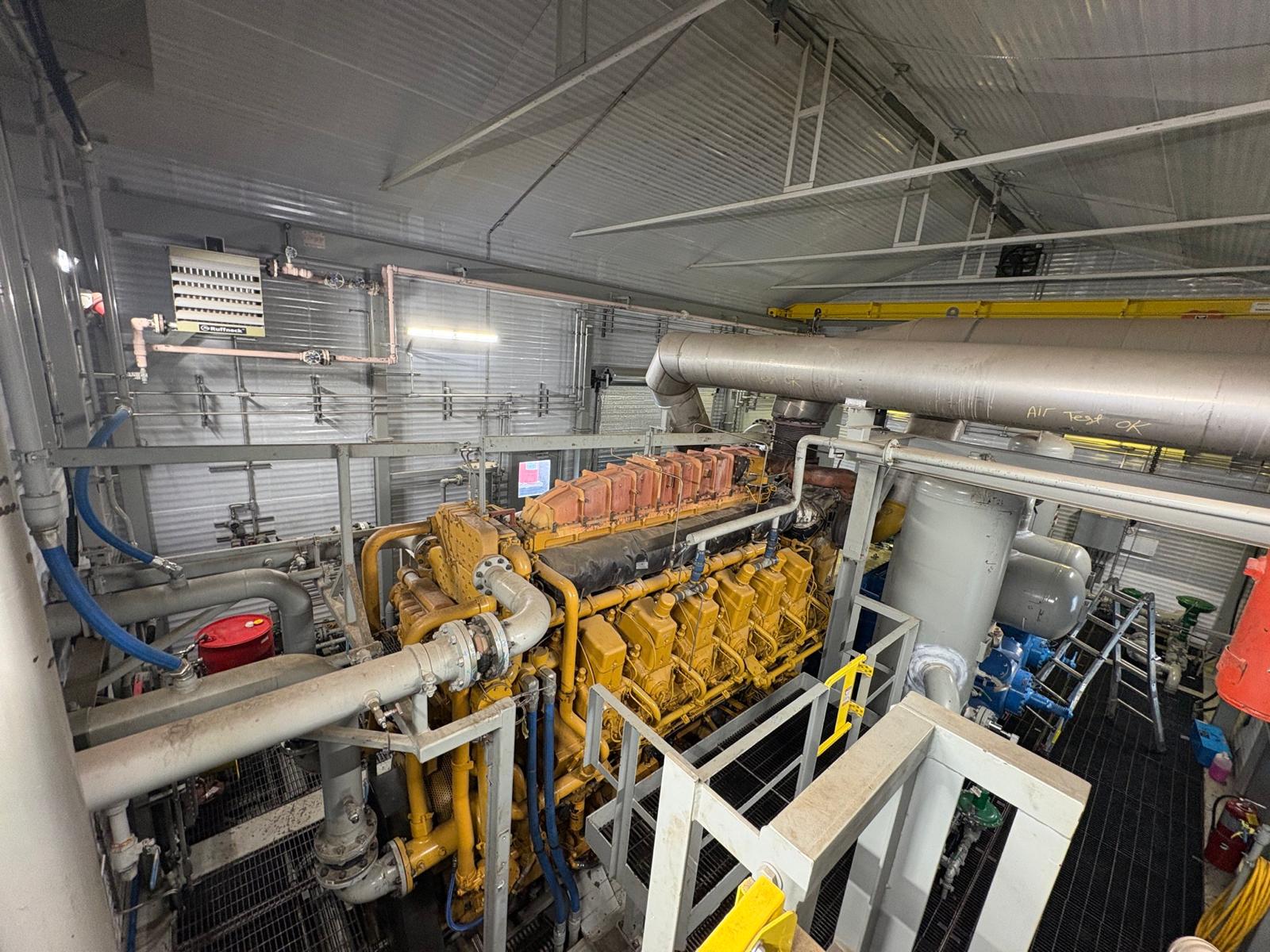
A field-level diagnosis of why Venezuela's oilfield power generation fleet — Caterpillar 3600s, G3516Cs, Cummins QSK60s, Solar Taurus turbines — is the real bottleneck to 1.5M bpd and what it takes to change that.
Here is what no one in a conference room in Houston wants to say out loud: Venezuela does not need more oil in the ground. It needs power. And the machines to generate that power — CAT 3600s, G3516Cs, CumminsQSK60s, Solar Taurus turbines — are already there, rusting in place, waiting for someone to walk up, open the panel, and figure out what's actually wrong.
That's what Planterra does. We are not an equipment broker. We are not a consulting firm that flies in, runs a spreadsheet, and flies out. We are a technical services company with boots in Maturin, on the Lake, and in the eastern basin — and what we're seeing tells a very specific story about where Venezuela's oil recovery is going to live or die.
This article is for the JV field managers, procurement leads, and energy investors who are tired of headlines and want to understand the actual mechanical reality on the ground.
Venezuela's national grid is effectively in free fall. The country relies on the Guri Dam for the backbone of its electricity — a hydroelectric facility that once supplied 70% of national demand and now operates at a fraction of its capacity due to drought and years of deferred maintenance. Thermoelectric plants, meant to be the backup, are running at barely 15% of installed capacity because fuel supply chains are broken and the equipment hasn't been maintained.
February 2026 data from Venezuelan monitoring organizations show that blackout frequency increased 78% in a single month compared to January — and average outage duration is running over four hours daily. That's not a grid. That's a liability
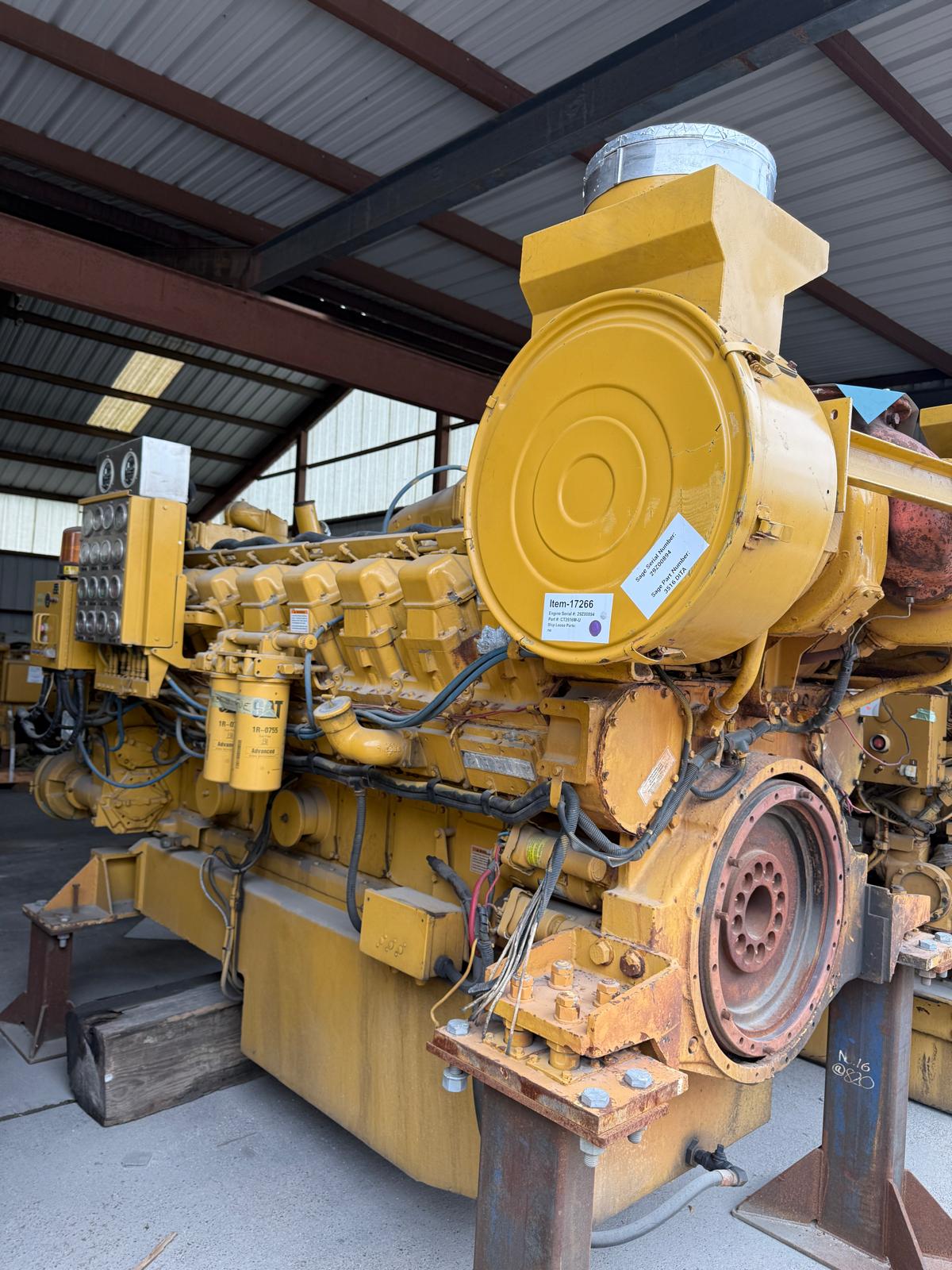
But here's the part the macro narrative misses: the oil fields don't depend solely on the national grid. The major fields —Bachaquero, Ceuta, Petropiar, El Furrial, Pedro Cedeño, Oritupano — have their own distributed power generation infrastructure. Generators. Turbines. Reciprocating engines.Equipment installed over decades of operations by Chevron, ConocoPhillips, and PDVSA's own engineering teams.
The problem isn't that Venezuela lacks power generation capacity in its oil fields. The problem is that a significant portion of that installed capacity has been run to failure, cannibalized for parts, operated without proper maintenance intervals, or simply abandoned as PDVSA's engineering workforce collapsed during the sanctions years. Nobody has done a credible Deet-wide technical audit in years. That's the gap. And that gap is costing the country barrels every single day.
Venezuela's oil industry splits cleanly into two geographies, and they have different power problems that require different technical approaches. The western fields are fighting a synchronization war — multiple brands of gen-sets, installed at different eras, trying to parallel onto the same bus without proper control systems. The eastern fields are fighting an hours-accumulation war — CAT 3600 series engines that have been running continuously, sometimes without proper lube oil analysis, fuel quality monitoring, or top-end inspections. Both are losing.
"The fastest path to 1.5 million barrels is not a new drilling program. It is restoring power to the artificial lift systems, the separation trains, and the water injection pumps that are already connected to wells that already produce."
-Planterra Field Assessment, 2026
Understanding Venezuela's distributed generation problem requires knowing the specific equipment. Here's an honest field-level assessment of the major engine families we're working with across both basins.
What this table makes clear: no single engine family is fine. The entire distributed generation fleet is operating on borrowed time. Many more are running in a degraded state — lower output, higher heat rate, elevated failure risk — because no one has had the technical resources to do a proper assessment.
Venezuela produced roughly 3.5 million barrels per day at its peaking the 1970s. By mid-2026, output sits at approximately 1 million bpd — a fraction of its potential- from a country that holds the world's largest proven oil reserves at 303 billion barrels. The stated national target is 1.5 million bpd by the end of 2026.
That target does not require discovering new reservoirs. Venezuela knows where the oil is. The Orinoco Belt alone holds enough heavy crude to supply the world for decades. What it requires is the ability to lift that crude — and lifting crude requires power.
Electric submersible pumps (ESPs) are the workhorse of Venezuelan artificial lift. A typical ESP installation draws between 200 kW and 1.5 MW of continuous power. A field with 50 active ESP wells needs a reliable 25–75 MW of power just to keep those wells producing. That power comes from the gen-set fleet. When those gensets go down — even intermittently — production drops immediately.
Assume a mid-sized eastern field running 40 ESP wells averaging 500 barrels/day each. That's 20,000 bpd from that field alone. A power interruption that takes 30% of the ESP fleet offline for even two weeks costs over 84,000 barrels in lost production at current prices. Multiply that across 15–20 fields with degraded power infrastructure and the production gap writes itself. The fastest ROI play in Venezuelan oil right now isn't drilling. It's making the existing wells produce the barrels they're already capable of producing — by fixing the power that drives their pumps.
There's a hidden asset in Venezuela's oil field power equation that gets almost no attention in the international press: associated natural gas.
Venezuelan heavy crude fields produce significant quantities of associated gas — gas that comes up with the oil and has historically been flared or vented because there's no infrastructure to capture it. This is an environmental and economic catastrophe of the first order. But it's also an opportunity.
The CAT G3516C and CAT 3600 series engines are both available innatural gas configurations. The Solar Taurus turbines run on gas.The pathway to sustainable, low-cost field power in Venezuela is transitioning from diesel — which must be imported, trucked, and paid for in hard currency — to field-associated gas, which is essentially free and currently being wasted.
Planterra's technical work on the Western basin CAT G3516C fleet is directly focused on this transition. The key engineering challenges are manageable with the right expertise: fuel quality conditioning (removing liquids and H₂S from wellhead gas),control system calibration for gas fuel variability, and paralleling protocol adjustment for multi-unit sites with mixed equipment.
This is not theoretical. It's the same playbook that has been executed in the Permian Basin, in Colombia's Llanos, and in Middle Eastern associated gas capture programs. Venezuela has the gas. The engines exist. The gap is technical expertise and the institutional will to prioritize it.
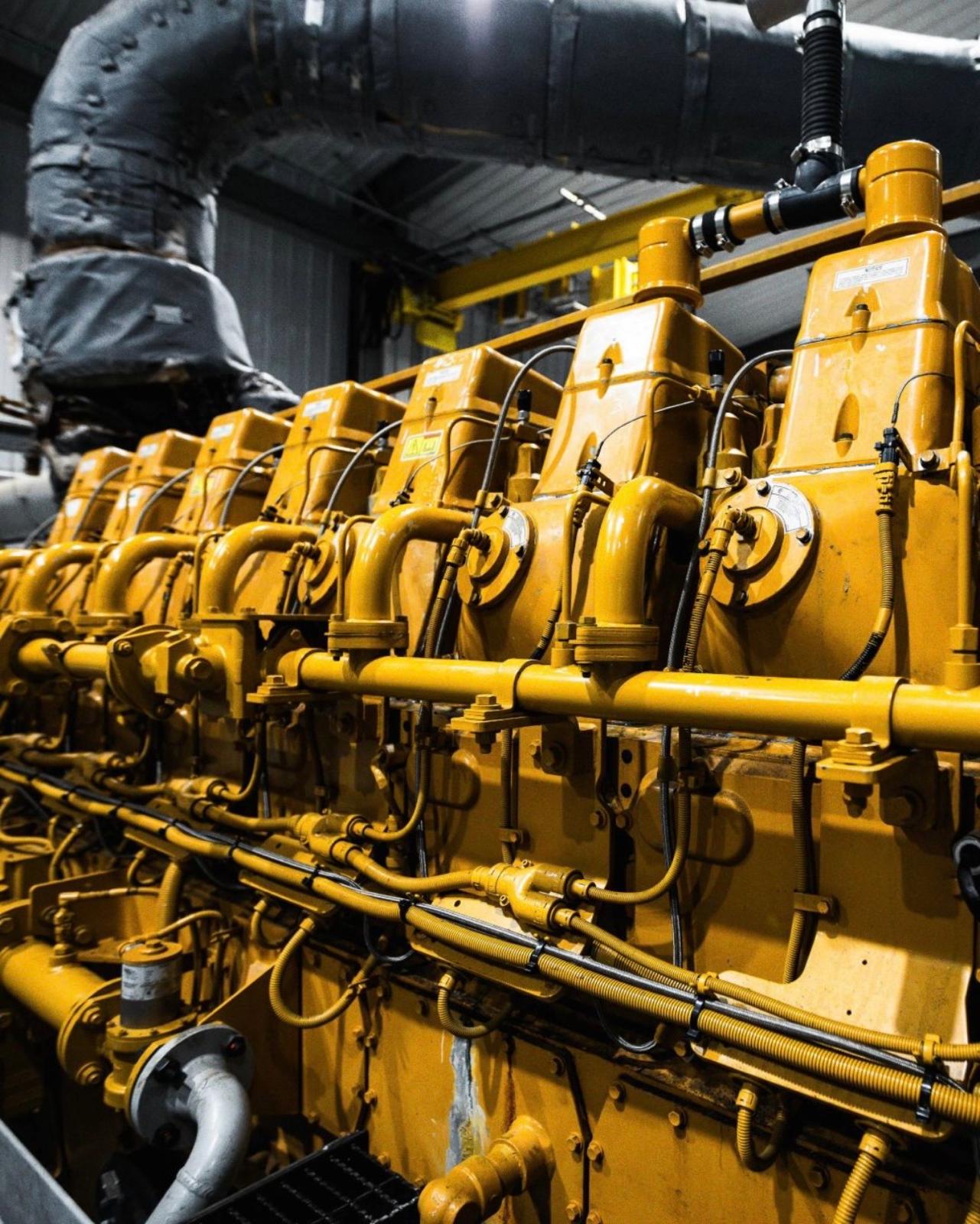
A proper Technical Integrity Audit for a Venezuelan oil field power generation fleet isn't a paperwork exercise. It's a physical inspection of every engine and turbine unit: running hours, lube oil analysis, compression tests, vibration data, fuel system condition, cooling system integrity, control system status, and parts inventory reconciliation. The output of that audit is a ranked priority list: units that can be returned to service with minor intervention, units that need planned overhauls, and units that need capital parts or replacement. That list becomes the field manager's maintenance budget and the operator's production forecast rolled into one document. So why hasn't it been done? Several reasons — and they're worth naming honestly:
Planterra was built for exactly this moment. We have the field presence, the CAT technical pedigree, and the track record in Maturin and the eastern basin to execute audits that produce actionable, field-ready data — not consultant reports that sit on a shelf.
Venezuela's power generation recovery — specifically for oil field operations — follows a logical sequence. There are no shortcuts, but there is a clear path.
A systematic Technical Integrity Audit of the installed gen-set and turbine fleet at the priority fields. The deliverable is a condition-ranked asset register with recommended intervention scope, estimated service hours, and associated cost. This phase typically takes 30–60 days per field and is fundable as an operational expense rather than capital — a critical distinction for JV budget approval processes.
Based on audit findings, execute maintenance and minor overhauls on the units with the highest production impact per maintenance dollar. In our experience across similar fleet conditions in the region, 25–40% of okine or degraded units can typically be returned to full service through maintenance interventions costing less than 20% of replacement capital. This phase funds itself within weeks through recovered production.
Where associated gas is available, begin transitioning diesel fueled gen-sets to gas fuel service. This requires fuel conditioning equipment, control system recalibration, and site-specific gas-quality analysis — all manageable with the right technical team. The operating cost reduction is dramatic, and the environmental benefit of eliminating flaring is significant.
Identify units that are beyond economic restoration and replace them with standardized equipment — ideally CAT G3516C or 3600 series units where parts commonality and service network make long-term maintenance sustainable. This is where new capital equipment comes in — not as the first step, but as the final optimization layer on top of a restored baseline.
Venezuela's power crisis stems from multiple compounding failures: the Guri Dam hydroelectric system is severely underperforming due to drought and infrastructure decay; thermoelectric plants are running at approximately 15% of their rated capacity due to fuel supply failures and deferred maintenance; and the national transmission grid relies on infrastructure that in some cases is 70 years old. Blackout frequency increased 78% between January and February 2026 alone, with average daily outage durations exceeding four hours.
Oil production in Venezuela depends heavily on electric submersible pumps (ESPs) for artificial lift. These pumps require continuous, reliable power — typically 200 kW to 1.5 MW per well. When field power generation fails, ESP-equipped wells stop producing immediately. Venezuela's current output of approximately 1 million bpd is dramatically below its potential, and a significant portion of that gap is directly attributable to power generation failures at the field level rather than reservoir limitations.
The primary CAT engine families in Venezuelan oilfield service are the 3600 series (3606, 3608, 3612, 3616) — large-frame reciprocating engines used for power generation, compression, and pump drive — and the G3516C natural gas generator set, amid-frame unit widely used in the Western basin (Lake Maracaibo area) fields. Both series are capable of running on field-associated natural gas, making them strategically important for reducing diesel dependency.
Venezuela has targeted 1.5 million barrels per day by the end of 2026, up from current production of approximately 1 million bpd. Venezuela holds the world's largest proven oil reserves at 303 billion barrels, meaning the production gap is an infrastructure and operations challenge, not a resource challenge. Restoring field power generation capacity is widely viewed as a critical prerequisite to achieving the production target.
Planterra Energy Services provides Technical Integrity Audits and field-level maintenance services for power generation equipment— specifically CAT 3600 and G3516C engines, Cummins QSK60gen-sets, and Solar Taurus turbines — at Venezuelan oil field operations in both the Eastern Basin (Petropiar, Oritupano, PedroCedeño) and Western Basin (Bachaquero, Ceuta, Lake Maracaibo area). Our work converts stranded installed capacity into operational production uplift.

We operate in Venezuela under Big Oil standards—so you don’t build locally or manage ops on the ground.