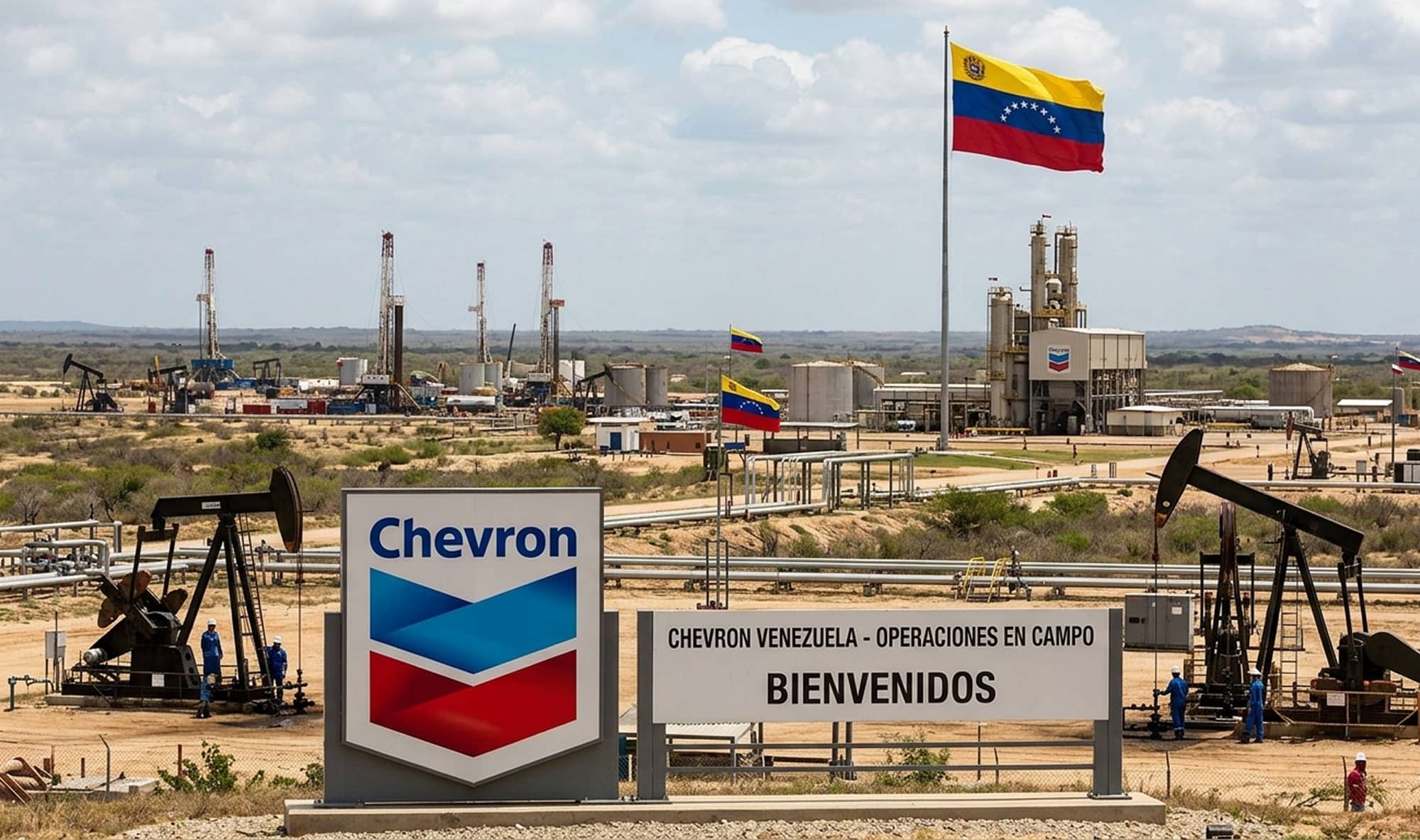
On April 13, 2026, Chevron Corporation announced a landmark asset swap with Petroleos de Venezuela, S.A. (PDVSA) — one of the most strategically significant moves by a U.S. major in Venezuela in over a decade.
Here is exactly what happened:
This is not an exit. This is a double-down. Chevron is concentrating its entire Venezuela bet on one thing: heavy oil in the Orinoco Belt — and they intend to grow it fast.
For anyone operating in U.S. oil and gas — equipment suppliers, service companies, drilling contractors, power generation specialists — this is a starting gun, not background noise.
Let's be direct about what a 50% production increase means in operational terms for a company producing 260,000 barrels per day from aging, complex heavy oil infrastructure.
It means: equipment overhauls, new power generation capacity, expanded well services, upgraded surface facilities, more rotating equipment, more maintenance contracts, more procurement — and it all needs to move fast.
Venezuela's Orinoco Oil Belt is home to some of the world's largest known heavy crude reserves. The fields that Chevron operates through Petropiar and now Petroindependencia sit in a region that was built primarily on North American industrial and oilfield technology. Much of that infrastructure — including hundreds of Caterpillar gas compression and power generation engines — has been under-maintained for years due to sanctions-era restrictions on parts and services.
The licensing environment has shifted. U.S. companies with Chevron-related supply relationships have a legitimate commercial path back into Venezuela. The question is no longer if the opportunity is real — it is. The question is how to execute it without the landmines.
In Venezuela, who you know, who you work with, and who shows up on your behalf defines whether a deal closes or disappears. That has not changed. What has changed is the scale of what's coming.
Venezuela is not a market you enter from a Houston conference room. Every U.S. supplier that has tried to scale operations in Venezuela from a distance has run into the same walls:
These are not theoretical challenges. They are the exact barriers that have kept otherwise capable U.S. companies on the sidelines — even as the commercial opportunity was right in front of them.
Planterra Energy is a Texas-based company purpose-built to serve as the operational bridge between U.S. oil and gas suppliers and Venezuela's active oilfield sector.
We were designed for exactly this moment.
We function as a full-service in-country operator and commercial facilitator for U.S. companies that want to do business in Venezuela without building a full local infrastructure. Specifically, we provide:
We are not a consulting firm selling reports about Venezuela. We are operators. We understand the commercial and technical language of the oilfield, we understand the regulatory environment on both sides, and we have the relationships to move things from conversation to contract.
Being Texas-based matters. We speak the language of American business and American oil. Being Venezuelan-rooted matters just as much. We know how things actually get done when the conference call is over.
If you already have a Chevron supply relationship and you want to know whether your product or service has a path into Venezuela — we can answer that question quickly, and if the answer is yes, we can help you execute it.
Markets like Venezuela do not stay open-access indefinitely. The current licensing environment, the OFAC framework around Chevron's operations, and the political dynamics between Washington and Caracas have created a window that serious operators should be moving through now — not studying from a distance.
Chevron's decision to consolidate its position rather than exit signals something important: the major players believe the trajectory is stable enough to commit capital. When Chevron commits capital, service and supply chains follow. If you want to be part of that chain, you need a presence established before the wave crests.
The companies that will capture the best contracts, the best margins, and the most durable relationships in Venezuela's coming production expansion are the ones moving today. Chevron's asset swap is the clearest signal yet that today is the right time.
If you are a Texas-based oilfield supplier, service company, or equipment manufacturer — and especially if you already have a relationship with Chevron or its supply chain — we want to talk to you.
We can assess your product or service against what's needed in Venezuela right now, walk you through the commercial and regulatory pathway, and tell you candidly whether there is a realistic opportunity for your company. No sugarcoating. No sales pitch disguised as a consultation. Just straight talk from operators who know both sides.
Contact us today to discuss how we can support your expansion into Venezuela.

We operate in Venezuela under Big Oil standards—so you don’t build locally or manage ops on the ground.